Project Overview
How might we create an engaging booth experience that showcases Umi's AI health coaching capabilities?
Panasonic needed to maximize their CES booth presence to launch Umi, a new AI health coach app for families. I designed an interactive kiosk experience that brought the product to life for attendees.
Role: UX Designer | Client: Panasonic | Event: CES | Platform: Interactive Kiosk
The Challenge
Panasonic was launching Umi, an AI-powered health coach app for families, at CES. They needed their booth to create memorable, hands-on interactions that would communicate the product's value to attendees in a crowded trade show environment.
Key Constraints:
Physical booth and kiosk dimensions dictated interaction design
High-traffic environment required quick, intuitive flows
Demo needed to work without extensive explanation
Approach
Ideation & Spatial Planning
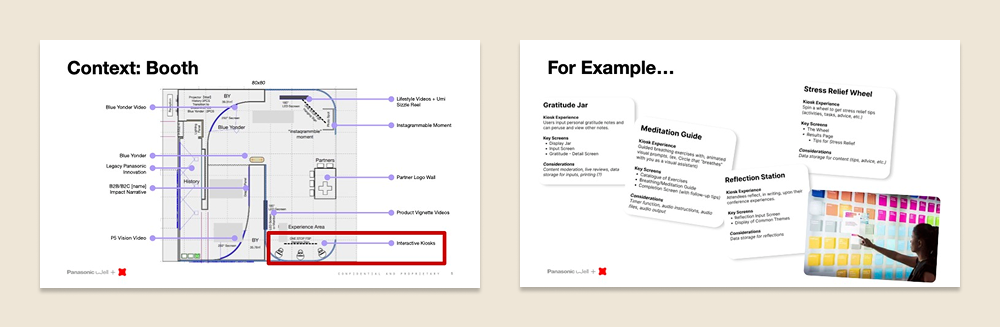
I worked with the team to explore how visitors would interact with the physical space. This included:
Booth layout explorations and top-down architectural views
Kiosk sizing and positioning studies to identify optimal touchpoints
Brainstorming interactive concepts that leveraged the physical environment
Concept Development
Created concept slides exploring different interaction models and user flows to align stakeholders on the experience direction.
Interface Design & Flow
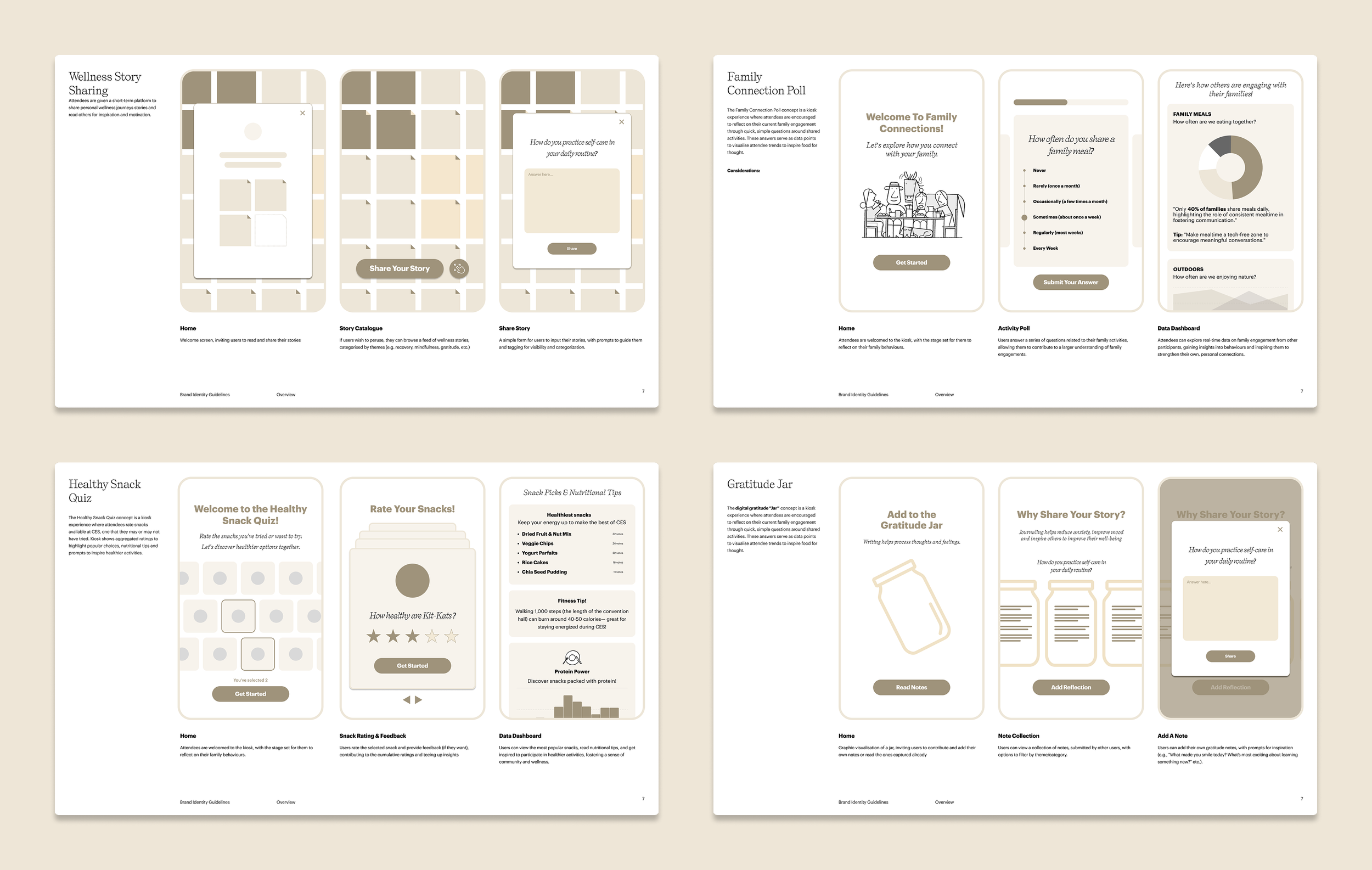
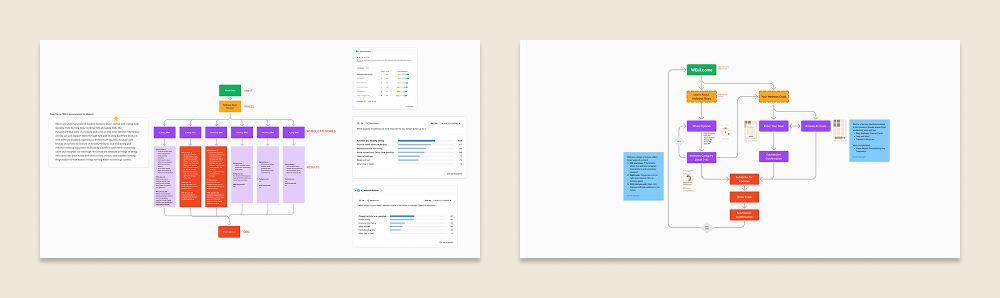
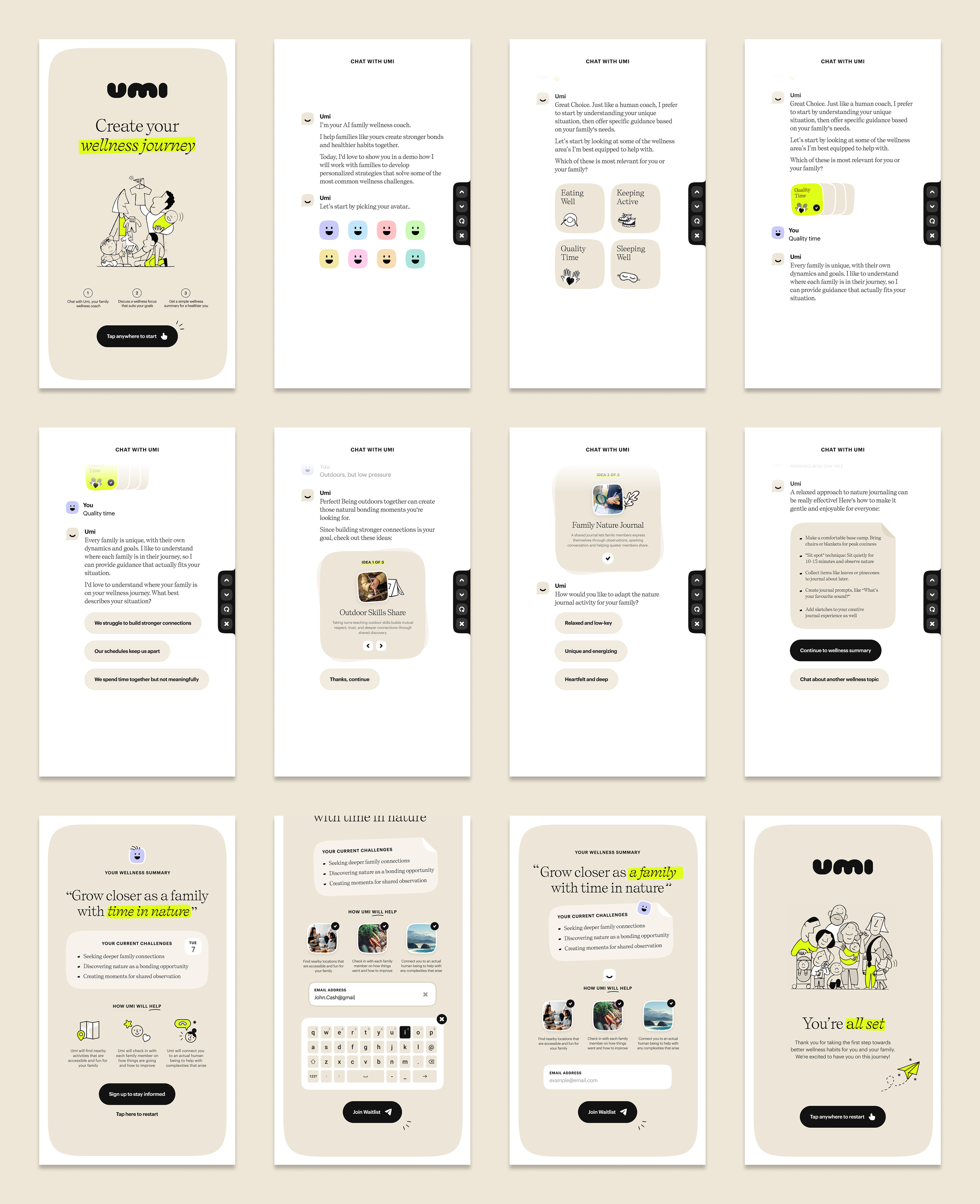
Designed the complete end-to-end kiosk experience with detailed mockups showing every interaction state and transition.
The Solution
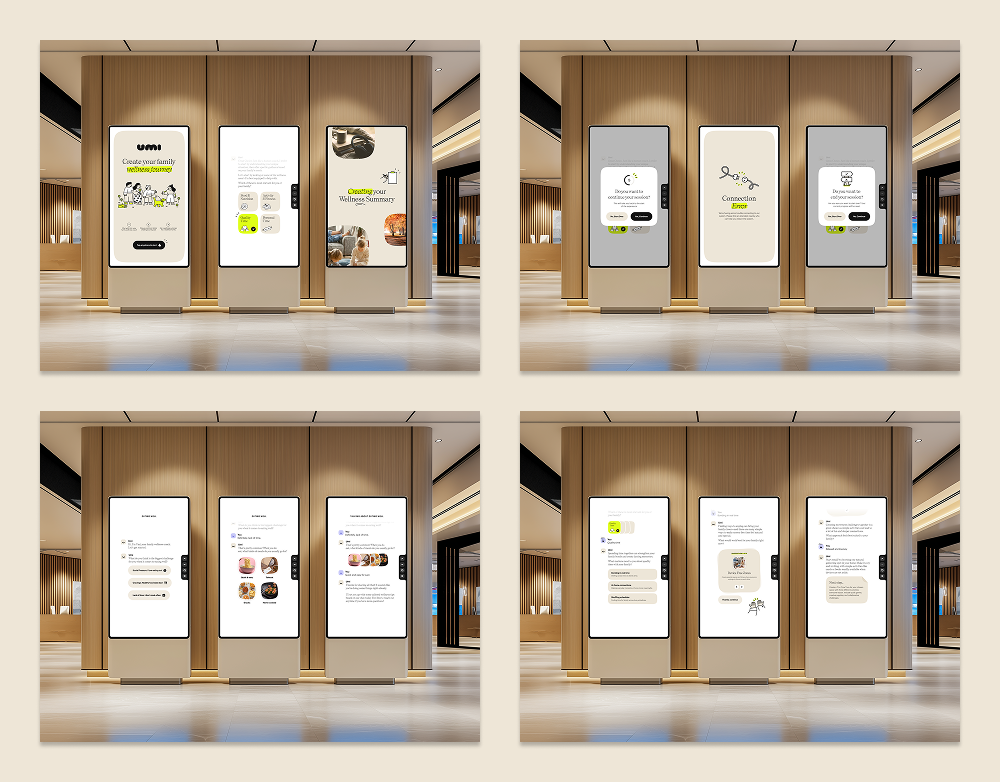
An intuitive, self-guided kiosk experience that walked CES attendees through Umi's key features. The interface balanced speed (for high booth traffic) with depth (to showcase product capabilities).
Development Collaboration
Worked directly with the development team to ensure designs translated effectively to the physical kiosk hardware and addressed technical constraints in real-time.
Impact
Successfully launched at CES, creating an engaging booth centerpiece
Enabled visitors to experience Umi's AI capabilities hands-on
Streamlined flow allowed high booth traffic without bottlenecks
Reflection
What worked: The spatial planning phase was crucial—understanding the physical constraints early shaped better interaction design. Close collaboration with developers ensured smooth implementation.
What I'd change: Would have loved to test the flow with users before CES to refine the pacing and information hierarchy based on real behavior.